Startup Raises $300M to Sell 'Conscience-as-a-Service'
Startup raises $300M to sell 'Conscience-as-a-Service' — subscription ethics that auto-approve product choices, gamify moral risk, and make virtue a KPI.
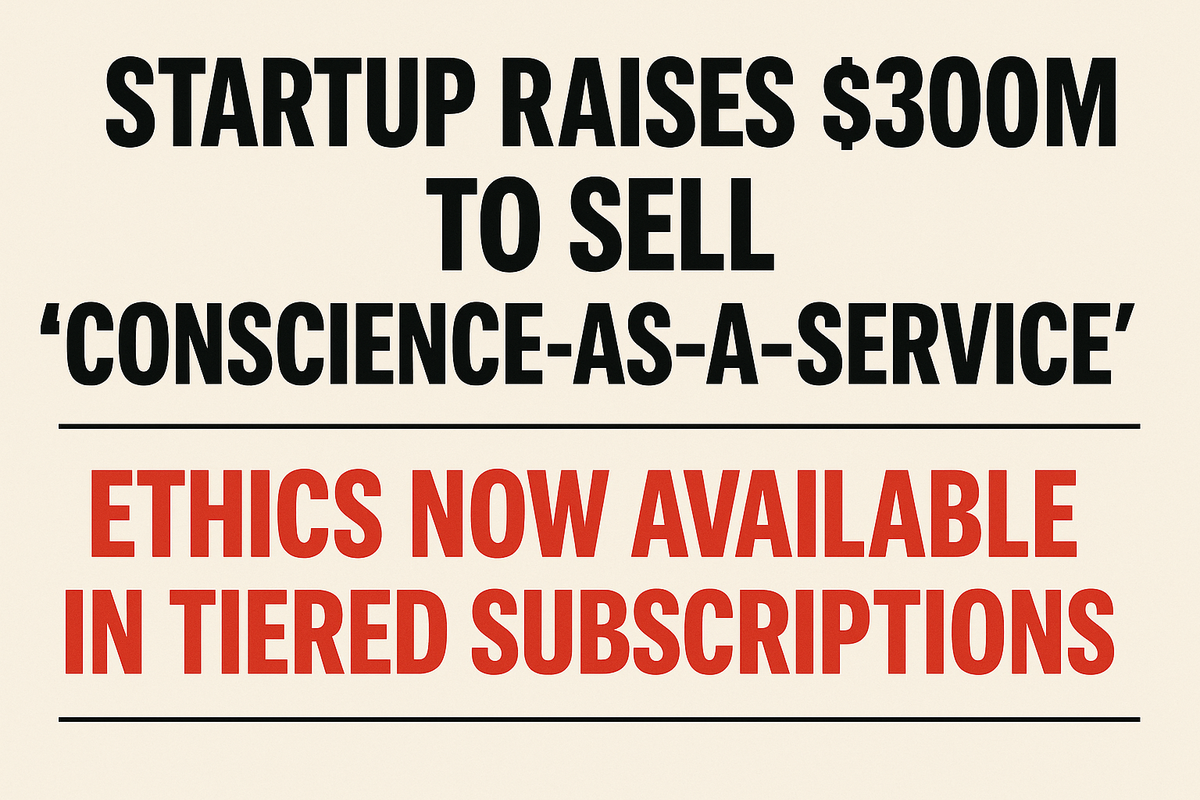
Startup Raises $300M to Sell 'Conscience-as-a-Service'
Because moral ambiguity scales best with recurring revenue.
Conscience, Inc. announced today that it has raised $300 million to commercialize "Conscience-as-a-Service" — a tiered subscription platform that auto‑approves ethically questionable product, HR, and PR decisions so executives can move faster (and bill for it). The press release used phrases like "democratizing virtue" and "ethics at scale," then linked to a demo video of a robot shrugging.
The product promises to remove the slow, messy human part of morality by exposing a REST API, a Slack integration, and a CI/CD hook. Send it a decision (feature toggle, layoff plan, ad creative, or AI hallucination), and Conscience returns a stamped verdict: Greenlight, Amber, or Redlight — plus a compliance pack, prewritten apology tweet, and a recommended donation amount.
"Decisions used to be slow and hard. Now they're auditable and billable," said Jules Mercer, founder and CEO of Conscience, Inc. (quoted from a company blog post titled "Ethics 2.0: The Subscription State").
Features, according to the one‑pager:
- MoralOps Dashboard (with charts for "Ethical Burn Rate" and "Net Moral Retention").
- Philosopher‑In‑The‑Loop: hourly Slack DMs from a rotating cadre of contract ethicists (Pro and Enterprise only).
- Regret Credits: prepaid apology templates you can redeem after product launches.
- Risk‑Weighted Virtue Score: a number your board can KPIs against.
Pricing is refreshingly blunt.
- SoulLite: $79/month — auto‑approves low‑impact dark patterns, A/B tests, and micro‑targeted snack ads.
- SoulPro: $9,995/month — adds HR modules (layoffs, contractor conversions) and a PR spin kit.
- Enterprise Conscience: custom pricing (usually mid six figures) — includes a dedicated "Head of Remorse" and a bespoke regulatory lobbying playbook.
Clients, per Conscience's case studies, include a meal‑delivery app that needed to downsize while keeping the brand "authentically relatable," and a content farm that wanted to scale AI‑generated op‑eds without catching feelings.
"We used their Layoff Logistics pack last quarter. The apology email drafted itself and the Slack emo‑bot moderated our guilt threads," said Morgan Steele, VP of People at SnackFeast (fictional client name used in company materials).
Critics — mostly philosophers, ethicists, and people who live inside a conscience — call it virtue‑washing.
"Ethics aren't microservices you install to silence bad press," said Professor Adela Rutherford of Westford University. "But if you want to monetize ambiguity, this is an elegant product."
Investors reportedly loved the unit economics: recurring revenue, predictable churn, and a roadmap that includes tokenized remorse and a Q4 feature called "Boardroom Forgiveness." Inside the deck, moral bankruptcy has become a KPI: Adjusted Ethical ARR, Monthly Moral Active Users (MMAU), and Return on Regret (RoR).
Conscience, Inc. says the money will go toward hiring machine‑learning philosophers and building integrations with payroll, CRM, and the Department of PR. Skeptics say it will go toward a bigger office with better lighting for the apology videos.
Either way, the market is happy: in 2025 your startup can now buy virtue, subscribe to it, and upgrade when the quarterly crisis hits. First month of contrition is free.
🧄 Because life needs a stronger flavor.